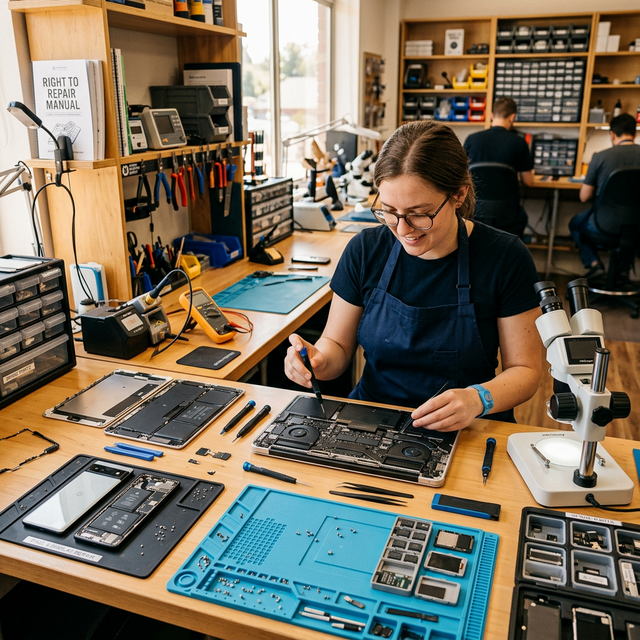
Beyond Compliance: A Strategic Shift
When most businesses first hear about the Right to Repair Directive (EU) 2024/1799, their initial reaction is to see it as yet another regulatory burden. More paperwork, more costs, more complexity. But forward-thinking companies across Europe are discovering something different: the Right to Repair is actually one of the most significant business opportunities of the decade.
Here's why: consumer attitudes are shifting dramatically. According to the European Parliament, 77% of people in the EU would rather repair a broken household appliance than replace it. That's not a niche market, it's the mainstream.
Businesses that embrace repair infrastructure aren't just ticking compliance boxes. They're building deeper customer relationships, creating recurring revenue streams, and positioning themselves as leaders in the sustainability economy.
The Competitive Advantages
Companies that move early on Right to Repair compliance are seeing measurable benefits:
- Extended customer lifetime value: Customers who repair stay loyal. They return for parts, services, and upgrades rather than switching to competitors.
- New revenue streams: Repair services, spare parts sales, and extended service contracts create predictable recurring revenue.
- Brand differentiation: In a market where sustainability is increasingly a purchase driver, repairability is a powerful differentiator.
- Regulatory risk reduction: Early compliance means you're prepared when enforcement begins, avoiding fines and market restrictions.
- ESG performance: Repair programs directly contribute to Environmental, Social, and Governance metrics that institutional investors care about.
What Leading Companies Are Doing
Across Europe, early adopters are already building repair ecosystems that go beyond the minimum requirements of the directive. They understand that the question isn't whether to comply, but how to turn compliance into a growth engine.
Major electronics manufacturers are partnering with independent repair shops, creating certified repair programs, and investing in modular product designs that make repair faster and more affordable. Retailers are training staff to inform customers about repair options and integrating repair services into their post-sale customer journey.
The result? Higher customer satisfaction scores, reduced product returns, and a measurable positive impact on sustainability metrics — all while staying ahead of regulatory requirements.
Getting Started With ELOEE
ELOEE provides the digital infrastructure you need to build a compliant repair ecosystem without the complexity. Our platform connects businesses with verified repair partners, automates compliance tracking, and provides the tools to inform and serve your customers — all from a single dashboard.
Whether you're a manufacturer, importer, or retailer, ELOEE adapts to your specific needs and helps you move from "we need to comply" to "we're leading the way."